Frame Drums: Bendir, Daf, and Riq
Frame drums — drums whose shell is shallower than the diameter of the head — are among the oldest instruments in the Middle Eastern musical world. They appear in every regional tradition, from Persian classical music to North African folk, and they range from the austere, jingle-free bendir to the elaborately decorated daf with its metal rings.
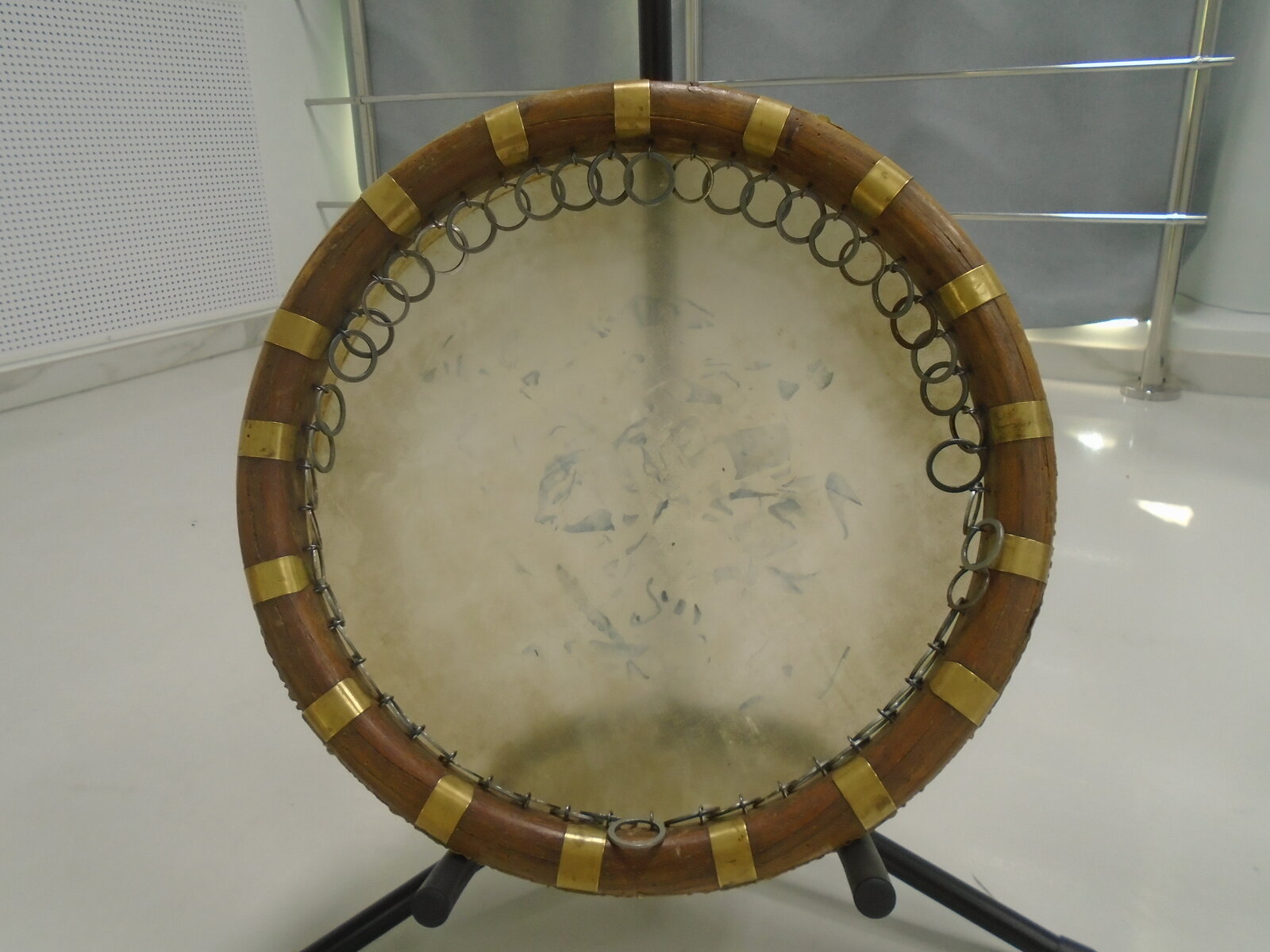
What makes a frame drum
Established A frame drum consists of a circular wooden frame (typically 30–60 cm in diameter) with a membrane stretched across one side. The frame is shallow — often just 5–10 cm deep — which distinguishes frame drums from deeper-bodied drums like the tombak or darbuka. The player holds the drum in one hand and strikes the membrane with the other, or uses both hands in more elaborate techniques.
Established The three principal frame drums in Middle Eastern classical and devotional music are:
- Daf — large Persian frame drum with metal rings
- Bendir — North African/Maghreb frame drum, often with a snare
- Riq — small Arabic tambourine with paired jingles
The Persian daf
Established The daf is a large frame drum (50–60 cm diameter) with metal rings or chains attached inside the frame. When the membrane is struck, the rings vibrate sympathetically, producing a shimmering, sustained sound that gives the daf its distinctive character.
Attested The daf has deep associations with Sufi devotional music, particularly in Kurdish and Persian traditions. It accompanies the singing of mystical poetry and zikr (remembrance) ceremonies. In recent decades it has also entered the Persian classical concert stage, expanding its role beyond purely devotional contexts.
Practice Daf technique involves a wide vocabulary of strokes: open tones in the center, rim shots, finger rolls, and techniques that engage the rings for sustained shimmer effects. The instrument is held vertically in one hand and played with both hands — a physically demanding posture that requires considerable stamina.
The bendir
Attested The bendir is the characteristic frame drum of North Africa, common in Moroccan, Algerian, Tunisian, and Libyan music. It typically features a thin gut or nylon snare stretched across the inside of the drumhead, producing a buzzing timbre when the membrane vibrates.
Attested The bendir's role spans devotional music (particularly Sufi dhikr ceremonies in the Maghreb), folk music, and Andalusian classical traditions. Its snare gives it a rougher, more textured sound than the clean tones of a daf or riq.
The riq
Established The riq is a small frame drum (approximately 20–25 cm diameter) with five pairs of small brass or bronze jingles (zils) set into the frame. It is the standard rhythmic instrument of the Arabic takht (classical ensemble) and plays the role of timekeeper, articulating the iqa' (rhythmic cycle) with a sophisticated vocabulary of strokes.
Attested Riq technique is among the most refined of any percussion tradition. The player produces distinct timbres — dum (bass tone from the center), tak (high tone from the rim), and various jingle effects — and combines them to articulate complex rhythmic patterns. The instrument's small size and sensitive membrane allow for subtle dynamic control.
Frame drums in makam and dastgah
Attested In Turkish classical music, the frame drum tradition is less prominent than in Arabic or Persian contexts — the kudüm (small kettledrum pair) is the standard classical percussion instrument. However, the bendir appears in Turkish Sufi music, particularly in Mevlevi and other tekke contexts.
Attested In Persian classical music, the tombak (goblet drum) is the standard percussion instrument, but the daf has gained increasing prominence in concert performance. During documents the daf's entry into classical contexts as a relatively recent development that expanded the percussion palette beyond the tombak's solo dominance.
Practice For students of Middle Eastern music, understanding the frame drum family matters because these instruments are the most accessible entry point into the rhythmic systems (usul and iqa') that structure this music. Their technique vocabulary — the distinction between dum and tek strokes — maps directly onto the stroke notation used to teach rhythmic cycles.
Where to go from here
The Turkish kettledrum: Kudüm. Rhythmic cycles they articulate: Usul and Iqa. The Persian modal system: The Dastgah System. Their role in Sufi music: Mevlevi and Bektashi Traditions.
Sources
- Jean During, The Art of Persian Music (Mage Publishers, 1991)Textbook / peer-reviewed
- Karl Signell, Makam: Modal Practice in Turkish Art Music (Asian Music Publications, 1977)Textbook / peer-reviewed
- Wikipedia contributors, 'Frame drum'Secondary sourceView sourceRetrieved 2026-07-30
External Resources
Between Frets is not affiliated with or sponsored by any of the resources listed below. Links are provided for educational purposes only.
- David Kuckhermann — World Percussion AcademyEstablished
German percussionist (84K+ subscribers) who studied with Glen Velez (frame drum) and Behnam Samani (daf). Structured frame drum courses at beginner and advanced levels. Performs with Dead Can Dance.
Arguably the most important online frame drum educator working today — his training with Behnam Samani connects him directly to the Persian daf tradition.
- Glen Velez — Master of Frame DrumsEstablished
Four-time Grammy Award winner and founding father of the modern frame drum movement. First percussionist to gain international recognition as a solo frame drum artist.
Essential viewing — Velez synthesized techniques from Middle Eastern, South Asian, and European traditions into the modern frame drum vocabulary that most current players build on.
- Negar Ezazi (@negar_ezazi)Established
International Daf and Percussion Artist (224K followers), founder of Viona Percussion. Daf performances, improvisation videos, and percussion instruction. Toured with Rastak ensemble.
Follow the most-followed daf player on Instagram for regular performance content showing the instrument in both traditional and contemporary contexts.
Structured online frame drum courses at beginner and advanced levels by David Kuckhermann, covering daf, riq, bendir, and cross-tradition techniques.
One of the few structured English-language curricula for Middle Eastern frame drum technique with a progressive learning path.
Dedicated website covering the daf as an Iranian frame drum, its role in Sufi music, history, technique, and cultural significance.
The most thorough English-language reference for the spiritual and devotional dimension of daf playing in the Persian Sufi tradition.
- Pejman Hadadi (@pejmanhadadi)Established
Internationally renowned Iranian percussionist (30K followers) proficient on tombak and daf. Durfee Foundation Award recipient, teaches at UCLA. Dastan Ensemble member since 1995.
Follow a master who bridges the tombak and daf traditions and has taught traditional Persian rhythmic cycles in the US for over 30 years.
- David KuckhermannAttested
SoundCloud profile for the frame drum specialist, featuring demonstrations and performances across daf, riq, bendir, and other frame drum traditions.
Access frame drum recordings and demonstrations that may include educational content and cross-tradition technique comparisons.
Related Articles
- RepertoireUsul and Iqa: Rhythmic Cycles in Ottoman and Arabic MusicAn introduction to usul, the cyclical rhythmic system of Turkish classical music, and its Arabic counterpart iqa — how they differ from Western meter, the dum/tek stroke vocabulary, common patterns, and their relationship to musical form.
- Persian DastgahThe Dastgah System: An Introduction to Persian Classical MusicAn overview of the twelve-mode dastgah system — seven primary dastgahs, five satellite avazes, and the radif tradition that defines Persian classical music.
- HistoryMusic of the Sufi Lodges: Mevlevi and Bektashi TraditionsHow the Mevlevi whirling ceremony and Bektashi hymn tradition shaped Ottoman classical music — from the ney's sacred voice to the saz's folk-mystical role — and what survives after the 1925 closure of the tekke.