Resources / Instruments / The oud
The oud
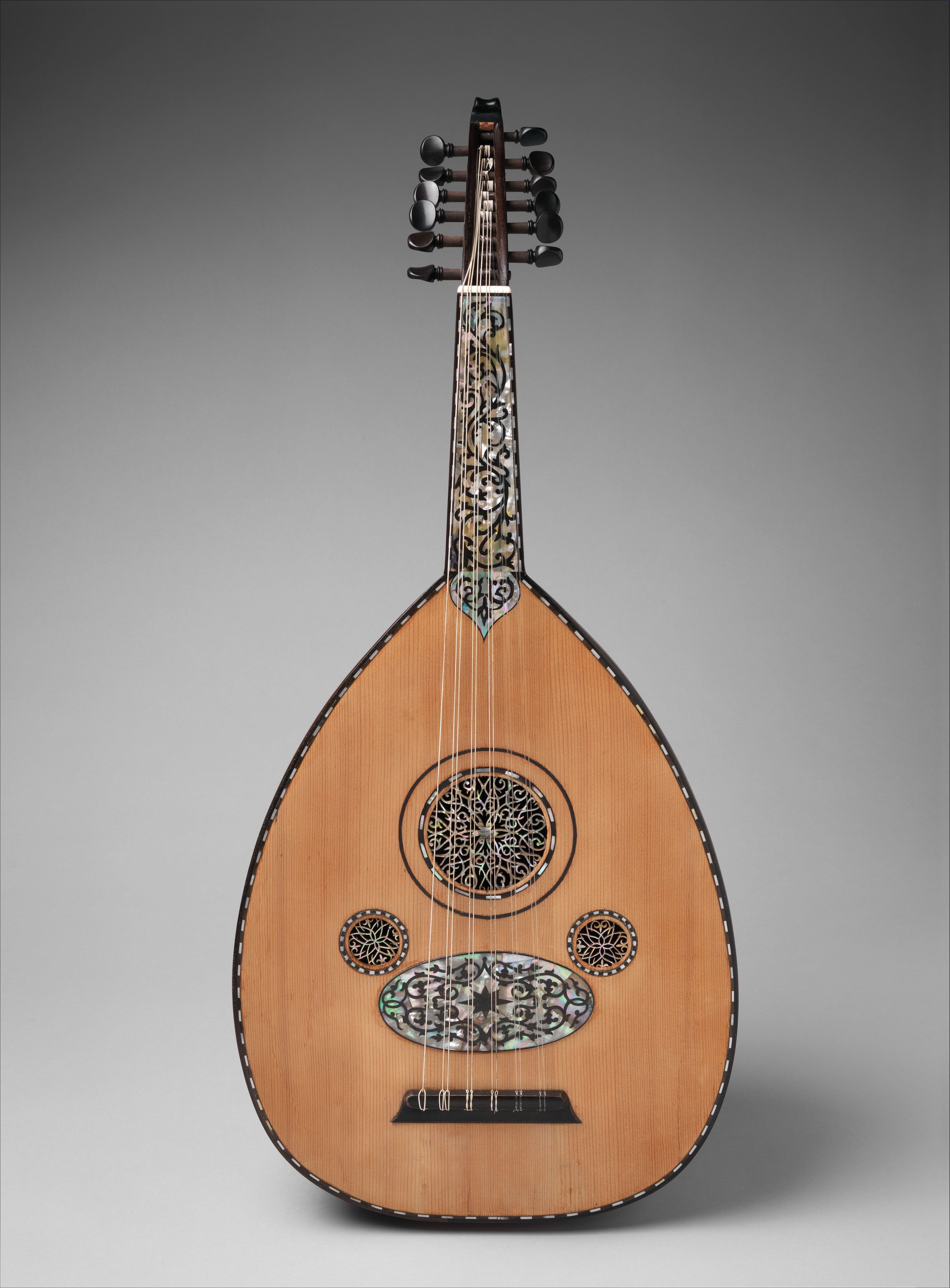
Covered here because it is the cümbüş's tuning and technique source, and because all available pedagogy for the cümbüş is actually oud pedagogy.
Turkish vs Arabic oud
Established Two distinct traditions sharing an instrument family.
| Turkish | Arabic | |
|---|---|---|
| Scale length | Shorter (~58–61 cm) | Longer (~61–63 cm) |
| Pitch | Higher, brighter | Lower, warmer |
| Body | Generally thinner soundboard | Heavier construction |
| Tuning | F♯2 B2 E3 A3 D4 G4 and variants | C2 F2 A2 D3 G3 C4 and variants |
| Theory | 53-comma AEU | 24-quarter-tone notation |
| Playing | More percussive, faster risha work | More sustained, legato |
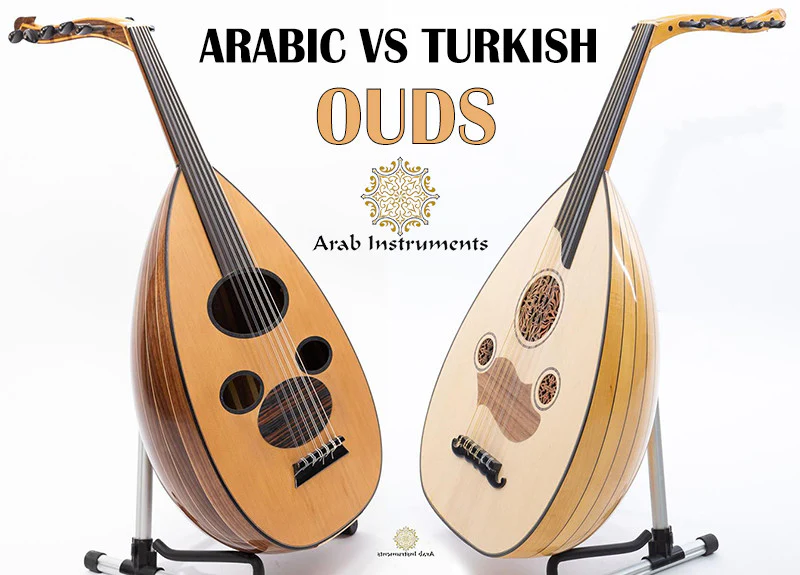
Practical implication: an Arabic oud method book teaches Arabic intonation. If you're studying Turkish makam, that will teach you pitches that are subtly wrong for the repertoire. Match your method to your tradition.
Tunings
See 02-tunings/catalog.md — the same tunings serve both instruments.
The one recurring trap: Turkish sources notate transposed. The classical Turkish
oud is described as Fa♯–Si–Mi–La–Re–Sol, but an electronic tuner reads roughly a
fourth lower. This isn't an error in either source. See
03-theory/turkish-vs-arabic.md.
Course structure
Established Usually 11 or 13 strings: five or six doubled courses plus a single bass string. Some Turkish ouds use six full doubled courses.
The cümbüş's six doubled courses correspond closely enough that fingerings transfer without adjustment.
Right hand
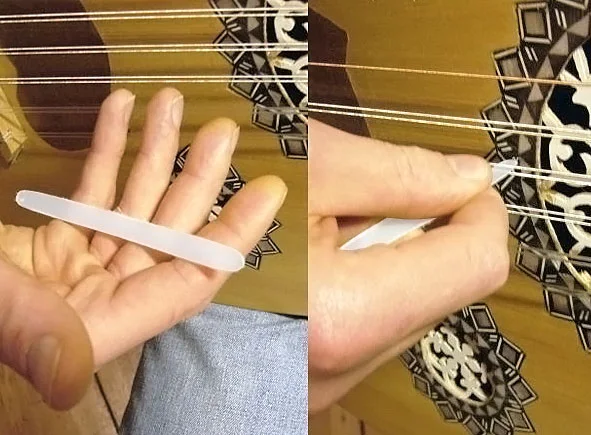
Established Played with a risha (Arabic) or mızrap (Turkish) — a long flexible plectrum, traditionally eagle feather quill, now usually plastic.
Basic stroke vocabulary: down (i), up (e), and tremolo. Roman-style playing on the
cümbüş uses fast alternating strokes heavily.
Uncertain Whether cümbüş plectrum technique differs materially from oud technique — plausibly the metal body and higher string tension change the approach, but I have not found a source addressing it directly. Open question.
Left hand — the part that matters for this app
Established No frets. Position is found by ear and by muscle memory relative to the open strings and to reliable reference points (the octave, the fifth).
Standard practice is to anchor on open-string relationships rather than absolute positions, because the target pitches shift with the makam. This is why the app should always offer a drone: intonation in this music is relational, and there is nothing to be relatively correct against without a reference tone.
Why the transfer works
The cümbüş left hand is doing exactly what the oud left hand does — same intervals, same positions, same makam vocabulary. The differences are all right-hand and timbral.
So: learn from oud channels and oud method books, apply to cümbüş. This is the single most useful practical conclusion in these docs.
Sources
- Wikipedia: Oud
- Karl Signell, Makam: Modal Practice in Turkish Art Music (rev. ed., Usul Editions, 2008)
- Murat Aydemir, Turkish Music Makam Guide (Pan Yayıncılık, Istanbul, 2010)
- Eric Ederer, "The Theory and Praxis of Makam in Classical Turkish Music, 1910–2010" (PhD dissertation, University of California, Santa Barbara, 2011) — on the gap between codified theory and documented performance practice
- Eric Ederer, "The Cümbüş as Instrument of 'the Other' in Modern Turkey" (M.A. thesis, University of California, Santa Barbara, 2006) — on the cümbüş/oud technique relationship