Resources / Instruments / The cümbüş
The cümbüş
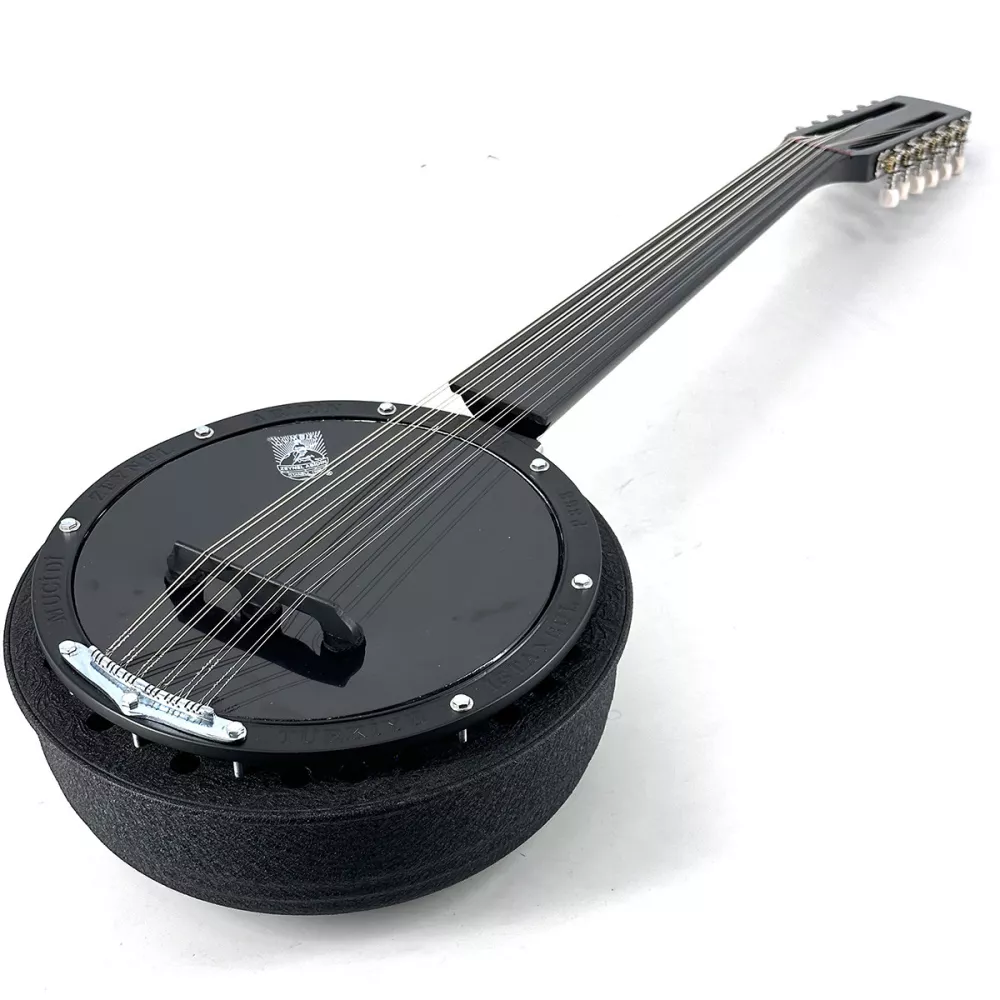
What it is
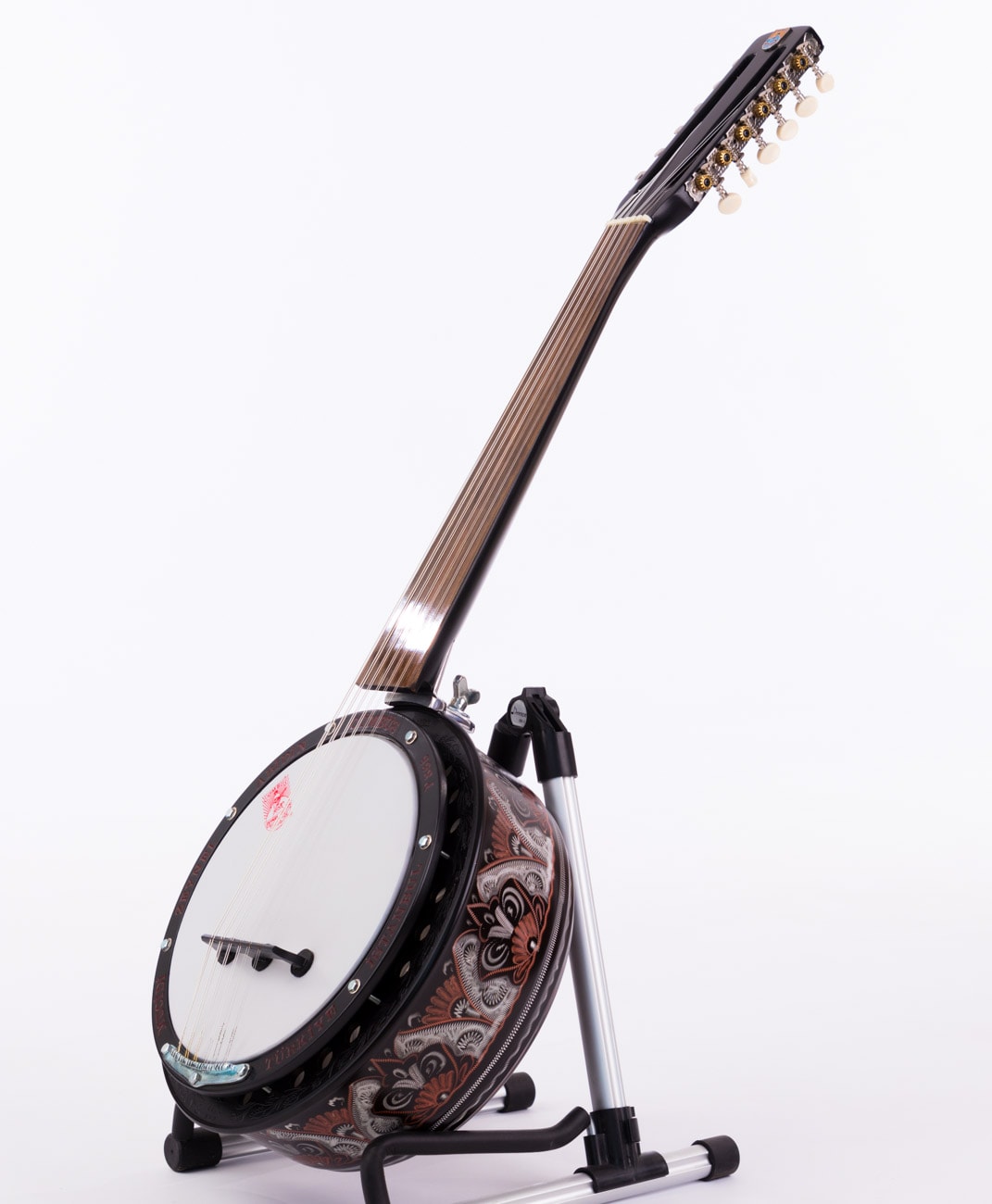
Established A fretless, six-course string instrument with a spun metal (typically aluminium) bowl and a skin head, developed in Turkey in the 20th century. Functionally an oud with a banjo-style resonator: same tuning family, same left-hand technique, very different timbre and volume.
The name means roughly "revelry" or "merriment" in Turkish.
Why it exists
Attested Invented by Zeynel Abidin Cümbüş in the early 20th century, in the early Republican period. The design goals were volume, durability, and cheap mass production — a wooden oud bowl is expensive and fragile; a spun metal bowl is neither.
The metal body projects far more than a wooden oud, which is precisely why it took hold in outdoor and wedding contexts where an oud would be inaudible.
The detachable neck
Established The neck unbolts from the body, and different necks convert the instrument to guitar, mandolin, saz, tanbur and other configurations. This modularity was part of the original design pitch.
Consequence: "cümbüş" without qualification is ambiguous. The default — and what these docs mean — is the oud-cümbüş: fretless, 6 doubled courses.
Courses and doubling
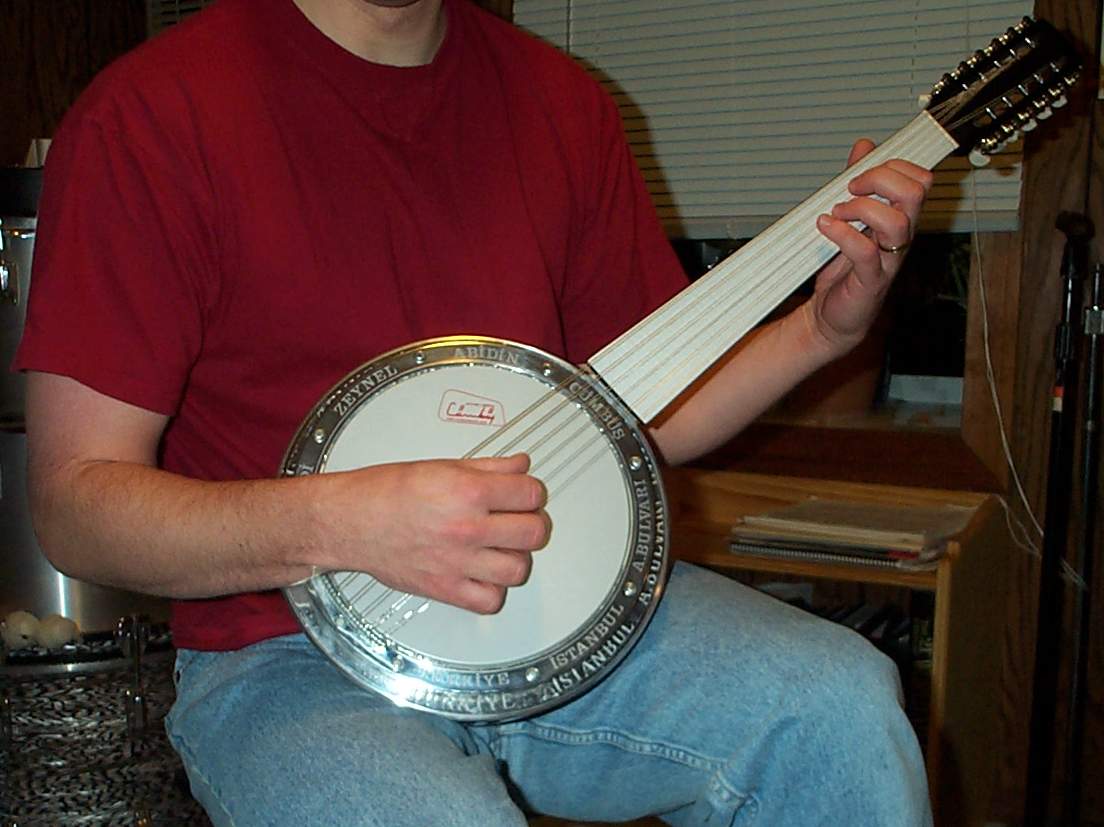
Established Six courses, each doubled in unison. Twelve strings total.
This is different from a 12-string guitar, where the lower courses are octave-paired. Unison doubling means a mistuned pair produces beating — a periodic wobble — rather than a shimmer. That beating is the tuning mechanism: bring the pair together until it stops.
The lowest course is the bam, functioning as a drone/bass rather than a melody course.
Why documentation is so thin
Attested A Turkish player summarised the situation on a forum: there is essentially nowhere teaching cümbüş, no established method book exists because the instrument is new, and in practice oud players play it using oud technique.
The instrument never acquired a conservatory pedagogy. It has no equivalent of the oud's method literature. Almost everything written about playing it is borrowed.
This is workable. The tuning is the same family as the oud and the left hand does
the same job, so oud material transfers directly. See 01-instruments/oud.md and the
resource notes in 07-research/.
Where it sits socially
Attested Strongly associated with Roman (Romani) musicians, wedding and celebration music, and the Aegean/Thracian regions. Its loudness suited outdoor playing; its price suited working musicians.
That association also gave it lower prestige than the oud in Turkish classical circles — part of why the pedagogical literature never developed.
Practical notes for the app
- Scale length varies by maker; roughly 600 mm is a reasonable default. Should be a user-configurable field, since it determines the physical mapping of every position.
- The skin head is sensitive to humidity and tension. Many players tune down a semitone or whole tone routinely. The app should support a global transposition offset rather than assuming concert pitch.
- Timbre for synthesis: bright, metallic, with a fast attack and a resonance signature from the metal bowl. The prototype approximates this with a peaking filter at ~1450 Hz. Crude but recognisable; a convolution or modal model would be better.
- The bam moves. Any tuning UI must make retuning the lowest course a first-class operation, not a settings-menu afterthought.
Related instruments worth knowing
| Instrument | Relation |
|---|---|
| Oud | Direct ancestor in tuning and technique; wooden bowl |
| Banjo | Direct ancestor in construction; skin head over resonator |
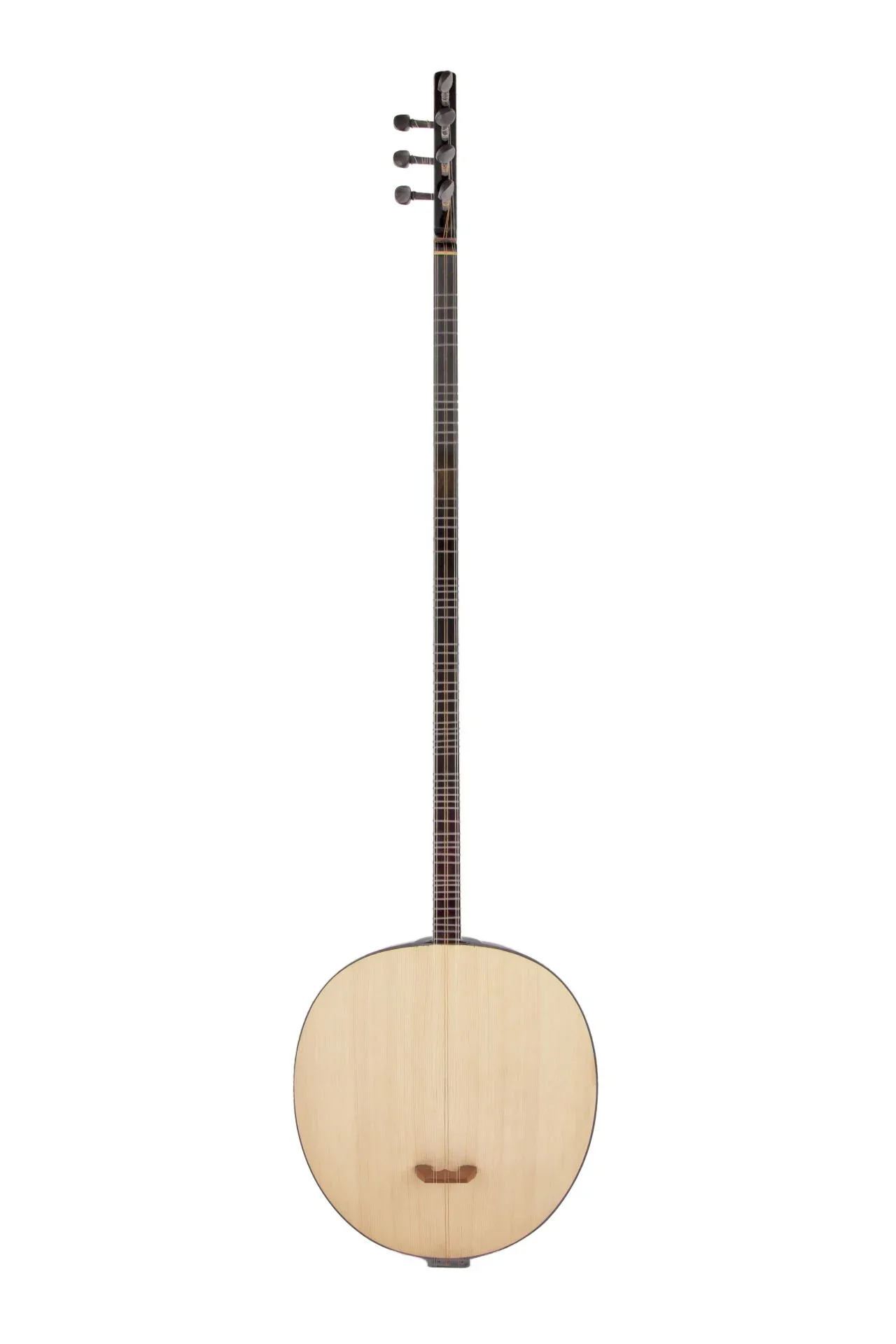
| Tanbur | Turkish long-necked lute, fretted with movable microtonal frets |
| Saz / bağlama | Turkish folk lute, fretted, different tuning system entirely |
Sources
- Eric Ederer, "The Cümbüş as Instrument of 'the Other' in Modern Turkey" (M.A. thesis, Ethnomusicology, University of California, Santa Barbara, 2006) — the primary academic study of the instrument's invention, design goals, and its class and ethnic associations
- Wikipedia: Cümbüş
- Wikipedia: Oud
- Karl Signell, Makam: Modal Practice in Turkish Art Music (rev. ed., Usul Editions, 2008)